
Geotechnical Investigation in a residential development
Challenge
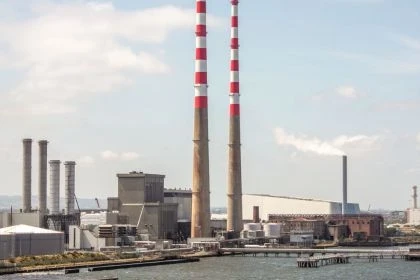
The client is a specialist in sustainable regeneration, delivering a residential development along on land along a waterfront that had undergone prior ground improvement.
The client needed independent verification that the ground improvement works were performing as intended beneath key development areas, ensuring that predicted settlements and bearing capacities remained within the design parameters.
This verification had to be completed while construction was ongoing and residents were in situ, so intrusive investigation and localised access restrictions required careful planning to minimise disturbance to occupiers and site operations.

Geotechnical Investigation in a residential development
Project description and overview
SOCOTEC Ireland undertook a targeted geotechnical investigation to confirm the performance of the improved ground and to provide detailed parameters for the design team’s ongoing assessments.
The works were carried out across selected plots and communal areas within the live development, in close coordination with the client’s project personnel and consulting engineers to ensure that all critical data requirements were captured efficiently.
The principal objectives were to quantify in-situ strength and deformability, monitor settlement behaviour and groundwater conditions, and evaluate the condition and response of existing foundation elements to support safe long-term occupation and future asset management decisions.
SOCOTEC Ireland undertook a targeted geotechnical investigation to confirm the performance of the improved ground and to provide detailed parameters for the design team’s ongoing assessments.
The works were carried out across selected plots and communal areas within the live development, in close coordination with the client’s project personnel and consulting engineers to ensure that all critical data requirements were captured efficiently.
The principal objectives were to quantify in-situ strength and deformability, monitor settlement behaviour and groundwater conditions, and evaluate the condition and response of existing foundation elements to support safe long-term occupation and future asset management decisions.
Geotechnical Investigation in a residential development
Solution
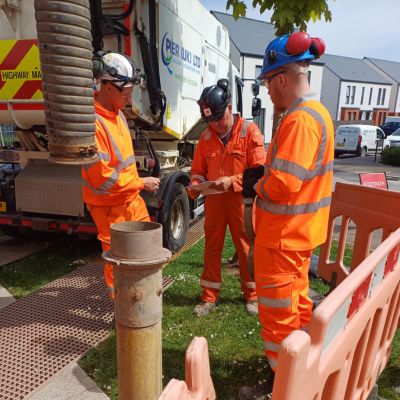
The site investigation comprised a comprehensive suite of in-situ testing, monitoring and sampling techniques, selected to provide robust, complementary data on ground performance.
Standard Penetration Tests and Borehole Field Vane Tests were undertaken to characterise in situ soil strength, with extensometers installed to monitor ground settlement profiles over the investigation period.
A systematic soil and rock sampling programme was implemented, with selected samples submitted for laboratory testing to derive key geotechnical parameters, while groundwater monitoring installations were used to track water level fluctuations and potential hydrological influences on the improved ground.
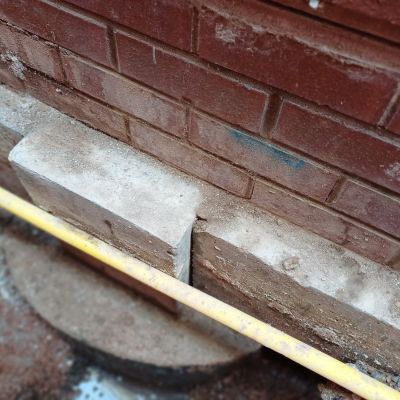
Targeted trial pits were also completed to allow direct visual assessment of existing piles and pile caps, and Cone Penetration Tests with pore pressure measurement, which were acquired and processed using CPTask and Datgel software. From there, this data was interpreted to provide shear strength, relative density, friction angle and soil behaviour type profiles referenced to ground level and ordnance datum.
The site investigation comprised a comprehensive suite of in-situ testing, monitoring and sampling techniques, selected to provide robust, complementary data on ground performance.
Standard Penetration Tests and Borehole Field Vane Tests were undertaken to characterise in situ soil strength, with extensometers installed to monitor ground settlement profiles over the investigation period.
A systematic soil and rock sampling programme was implemented, with selected samples submitted for laboratory testing to derive key geotechnical parameters, while groundwater monitoring installations were used to track water level fluctuations and potential hydrological influences on the improved ground.
Targeted trial pits were also completed to allow direct visual assessment of existing piles and pile caps, and Cone Penetration Tests with pore pressure measurement, which were acquired and processed using CPTask and Datgel software. From there, this data was interpreted to provide shear strength, relative density, friction angle and soil behaviour type profiles referenced to ground level and ordnance datum.
Conclusion
SOCOTEC successfully delivered the required verification of ground improvement performance, supplying the client and design team with high quality, data driven evidence that the treated ground and foundation systems were operating within the intended design envelope.
The combination of field testing, monitoring, laboratory analysis and advanced CPT interpretation provided a detailed understanding of subsurface conditions, enabling informed decisions on settlement management, structural design refinements and future maintenance strategies.
Throughout the works, close liaison with project stakeholders ensured that investigation activities were completed safely and efficiently within a live residential environment, demonstrating SOCOTEC’s ability to support complex regeneration schemes while maintaining high technical standards and minimising disruption.
Want to find out more about...
Discover our latest News & Media

What lessons could we learn from Section 82 of the Environment Act 2021?


The benefits of Mobile GPR for Ground Radar Imaging Surveys
Three decades later: Nigel Dillon’s journey from Trainee to Managing Director